
Wholesale supplier of rough minerals for shops and resale

At UniArt, we specialise in the sale of rough minerals for shops, professionals and businesses looking for natural pieces with good presentation, a wide variety of species and different price levels. In this category, we bring together a broad selection of collectable minerals in rough, semi-rough and semi-polished formats, intended for resale, shop display and the creation of assortments with greater visual and commercial value.

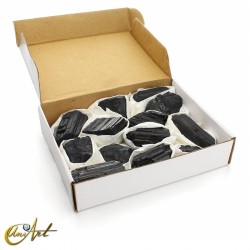
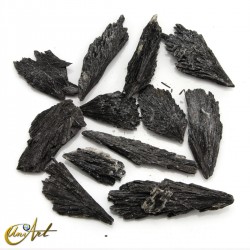
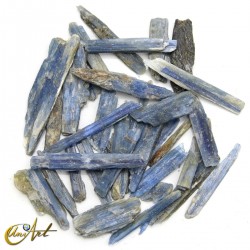
Our catalogue includes quartz, amethyst, citrine, kyanite, black tourmaline, selenite, moonstone and many other varieties. These products are very interesting for mineral shops, esoteric retailers and specialised businesses that want to expand their range with rough stones in different sizes, qualities and formats, from accessible pieces with good turnover to specimens with stronger display presence.

We work this category with an approach focused on professional sales, combining affordable references, lot or kilo formats and pieces with greater visual appeal. To help our customers buy minerals wholesale more effectively, we have prepared a practical buying guide with useful criteria for choosing an assortment, distinguishing types of pieces and getting more commercial value from each purchase.

Active filters


Guide to buying rough minerals for shops and resale

Rough minerals are not all bought using the same criteria. In a shop, some pieces work because of price and turnover, others because of their visual strength, and others because they allow more commercially valuable specimens to be selected from within a lot. Understanding these differences helps you build a more profitable assortment, improve window display and get more out of every purchase.

In this category, we bring together rough minerals and collectable minerals intended for retail businesses, resale and specialised shops. Here you will find massive pieces, crystallised specimens, kilo formats and references with greater presence or uniqueness. The key is not just the mineral species itself, but how the assortment is selected and how well each shop presents each type of piece.

Which types of rough minerals usually work best in a shop

For a shop, the most advisable approach is usually to combine several levels of product within the same category. On the one hand, it is worth working with rough minerals that are affordably priced and have good turnover, allowing customers to buy on impulse or begin a purchase with a low spend. On the other hand, it is useful to include pieces with greater presence, better crystallisation or larger size, which increase the visual value of the display and help raise the average ticket value.

A well-planned assortment usually combines affordable references, kilo formats, eye-catching pieces and some specimens with more character. In this way, the shop does not depend solely on the quick sale of small pieces, but can build a more complete range with greater margin potential.

Difference between massive and crystallised

One of the first useful distinctions when buying rough stones for a shop is the difference between massive material and crystallised material. Massive minerals are those presented in blocks, compact pieces or fragments without clearly defined crystals visible at first glance. They usually work well because of price, purchase volume and ease of display in lots, boxes or grouped pieces.

Crystallised minerals, by contrast, show a visible crystal formation and tend to have greater visual appeal. This gives them more commercial presence, especially when you want a piece that stands out in the display or can be sold with a higher perceived value. In a shop, both types are useful, but they fulfil different functions: massive material tends to turn over well, while crystallised material brings more impact and differentiation.
A clear example is clear quartz, which can be worked both in a massive format and in a crystallised format. Massive quartz is usually more affordable and very useful for broader assortments or accessible-price sales, while a druse or crystallised quartz formation has more visual presence and can be sold with a higher perceived value.

Difference between geode and druse

It is also worth clarifying the difference between a geode and a druse, as these are terms that often create confusion. A geode is a hollow or partially hollow formation that contains crystals inside. A druse, by contrast, is an open surface covered with visible crystals. Commercially speaking, a geode tends to offer more of a surprise effect, while a druse is highly eye-catching and easy to display.
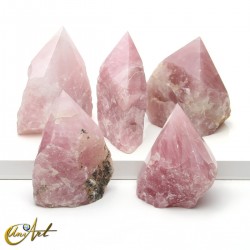
In many cases, a druse may actually be a fragment of a larger geode that has been opened or broken apart. So although they are presented differently in commercial terms, there is a natural relationship between the two formats.

As an example of geodes, we can mention agate geodes, which are highly valued for their internal structure and decorative effect. As examples of druses, amethyst druses and quartz druses work very well, standing out for their brightness, visible crystallisation and ease of display in a shop.

What rough, semi-rough and semi-polished mean

Within the trade in rough minerals, not all pieces show the same degree of intervention. When we speak of rough material, we mean a piece that retains its natural appearance without polishing or major finishing work. By contrast, a semi-rough or semi-polished piece usually keeps much of its natural look, but may have received some cutting, cleaning, base work or partial polishing to improve presentation, stability or the visibility of the mineral.
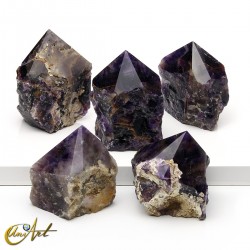
In commercial practice, semi-rough and semi-polished are often used in a fairly similar way. What matters for a shop is understanding that this small amount of work can greatly improve presentation without removing the natural character of the piece.

What we mean by a collectable mineral in a commercial setting

The term collectable mineral can be understood in many ways. In a very specialised setting, it is associated with rare specimens, high quality pieces or minerals of a high mineralogical level. However, in a more commercial setting, it can also refer to pieces that stand out because of their aesthetics, their crystallisation, their mineral association or simply their visual appeal compared with others from the same lot.

This concept should not be understood as something reserved only for expensive or very exclusive pieces. In reality, any shop can work with a small line of minerals with special value within a normal commercial assortment. Even a customer who gathers different massive minerals is already building a collection in a practical sense, and that variety can have interest and value in itself.

For that reason, products such as boxes of rough minerals or mixed lots are very useful for shops: they allow variety to be offered, different tastes to be covered and a solid base assortment to be created. From there, some pieces may stand out more and be sold using a different approach.

How to detect more valuable pieces within a lot

One of the most important points when buying rough minerals is learning how to check each lot carefully. Not all pieces have the same commercial value, even if they belong to the same mineral species and arrive in the same purchase. Within a lot, there may be specimens with rarer crystallisation, a more curious shape, a more attractive mineral association or a visual presence clearly above average.

This is where much of the commercial opportunity lies. A shop that simply sells everything in the same way leaves margin on the table. By contrast, a shop that looks closely at each piece can separate certain specimens and offer them as differentiated pieces, with better presentation and a higher price. Very often, value depends not only on strict mineralogical quality, but also on aesthetics, visual balance and the uniqueness of the formation.
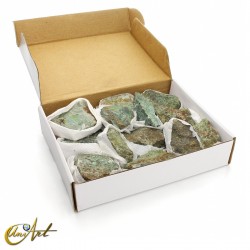
For that reason, we advise checking each delivery carefully and looking for anything within the lot that goes beyond standard material. Rare crystallisation forms, mineral associations or specimens with uncommon beauty can greatly increase the selling value of part of the purchase.
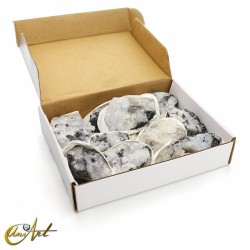
Apophyllites and zeolites: a very interesting option for shops

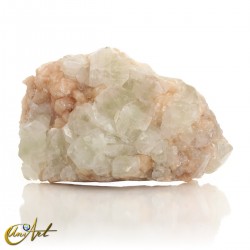
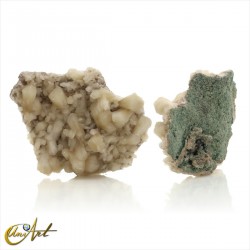
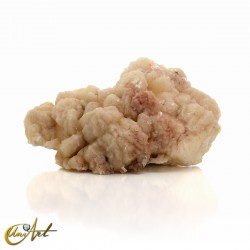
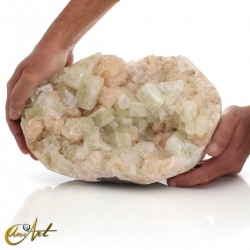
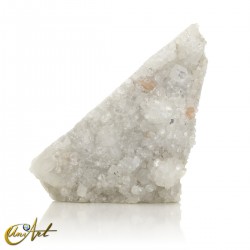
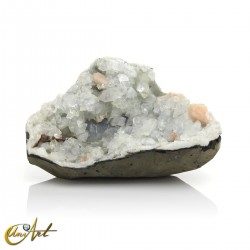
A very interesting family within collectable minerals in a commercial context is that of apophyllites and zeolites. They usually offer a very good relationship between cost and aesthetic potential, because they can display striking mineral associations, curious crystals and rather distinctive formations without requiring extremely high prices.

Within a lot of apophyllites or zeolites, truly different pieces can appear. Some work as accessible products, while others deserve to be highlighted separately. For a shop, this is very valuable, because it allows economical material to be bought by the kilo or by the lot while also finding pieces with greater margin and stronger visual appeal.

Common mistakes when buying rough minerals for a shop

One of the most common mistakes when starting to work with rough minerals in a shop is focusing only on small, cheap pieces, while also buying very few units of each type. Although this approach may seem prudent at first, it often results in a poor assortment with little visual presence and limited ability to attract attention.

Minerals are largely sold through visual appeal. One or two loose pieces, lost among other products, usually go unnoticed and do not create the impact needed to spark customer interest. By contrast, an assortment with more variety or with several pieces of the same stone helps create cohesion, presence and a sense of abundance, which is very important in this kind of product.

It should also be kept in mind that mineral buyers like to choose. There is a visual and also psychological component: many people want to find their piece among several options. For that reason, selling rough minerals well is not just about having a minimal sample; it is advisable to offer enough quantity for the customer to compare, choose and connect with the piece that attracts them most.

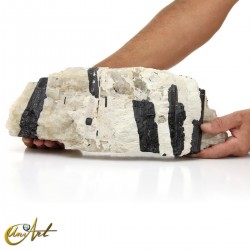
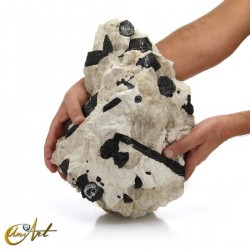
Another common mistake is avoiding large pieces for fear that they will turn over more slowly. However, a large piece fulfils several commercial functions: it attracts attention, gives presence to the display, conveys authority to the shop and helps to sell other surrounding products. In addition, when it sells, its impact on the day’s takings is far greater. Many private customers also find it harder to obtain large specimens, so including some pieces of this kind can help differentiate the offer more effectively.

How to prepare a balanced assortment of rough minerals

In a shop, the most advisable approach is usually to combine a few large or eye-catching pieces with a good quantity of more affordable and varied pieces. Large pieces bring visual strength and prestige to the display, while small and medium pieces make turnover easier and allow the customer to choose between several options. This balance between presence, variety and price usually works much better than an assortment that is too short or too limited.

It is also advisable to avoid betting everything on too little quantity. With minerals, having several pieces of the same stone or a well-presented group usually sells better than showing a single isolated piece. The ideal approach is to prepare an assortment that mixes entry-level product, eye-catching references and some pieces with greater commercial value. In this way, the shop not only sells more, but also presents the category better and builds a space with its own identity.

In short, buying rough minerals for a shop is not just about choosing mineral species, but about understanding how each type of piece behaves within the display, the assortment and the order. A good purchase is not the one that gathers the most references without criteria, but the one that combines turnover, visual presence, freedom of choice and commercial margin.